
 Appeal denied for Hanover man in child porn case
 Enfield Zoning Board approves variances for 300-unit development

State, community members differ on plans for bridge spanning river between Charlestown and Springfield, Vt.
CHARLESTOWN — State officials and area residents remain at odds over plans to fix the nearly 100-year-old Cheshire Bridge, which spans the Connecticut River between Charlestown and Springfield, Vt.The New Hampshire Department of Transportation had...

City cites Claremont property owner over demolition of building
CLAREMONT — Atta Ullah thought he was solving a problem for himself and the city earlier this spring when he paid $22,000 to demolish a vacant farmhouse on Washington Street that had become a dilapidated hazard.Instead, Ullah appears to have created a...
 Homeless Upper Valley couple faces ‘a very tough situation’
 Editorial: Hartford is right to give banners due consideration
 Kenyon: Dartmouth shows it has no patience for peaceful protest
 Publisher’s note: Valley News launches updated online app
Sports

Miscues overwhelm Hurricanes baseball in Tuesday night contest
WHITE RIVER JUNCTION — If the Hartford Hurricanes want to make a deep run in the upcoming VPA Division II baseball playoffs, they can scarcely afford more performances like Tuesday night’s. The Hurricanes battled well at the plate against Brattleboro...
 Local Roundup: With win, Lebanon girls tennis locks in No. 2 tourney seed
 Raiders, Cardinals short on boys lacrosse victories but making up for it with effort
 Local Roundup: Hanover, Hartford, Windsor win on the softball diamond
 Bears girls finish first in CVC Championships
Opinion

Editorial: Response to campus protests only adds fuel to the fire
It’s far too soon to tell what the ultimate effect will be of the demonstrations that have roiled college campuses this spring, including those at Dartmouth, the University of New Hampshire and the University of Vermont. But we hazard an educated...
 Editorial: Chris Sununu’s moral vacuum
 Editorial: Gambling tarnishes America’s sporting life
 By the Way: A white nationalist’s many mistruths
 Column: The age-old question of what to read

Photos

Words of welcome
 Maternal meditation
 River release
 Spring in the garden
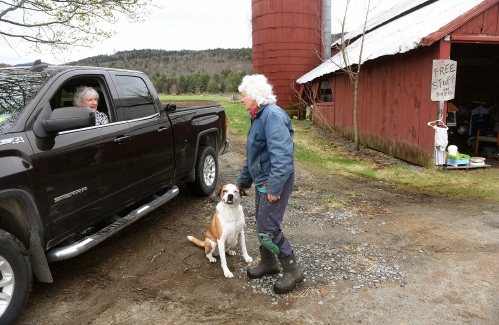 Deposit with interest
e-Edition
Arts & Life

Enfield Shaker Museum renovations underway
Greg Morgan, left, from Geddes Building Mover, of Bow, N.H., guides a beam as the company's owner Jim Paveglio lifts it out from under the Brethren’s West Shop at the Enfield Shaker Museum on Tuesday morning. The 55-ton building, built in 1820 as a...
 Art Notes: Canaan Meetinghouse showcase brings musicians and listeners together
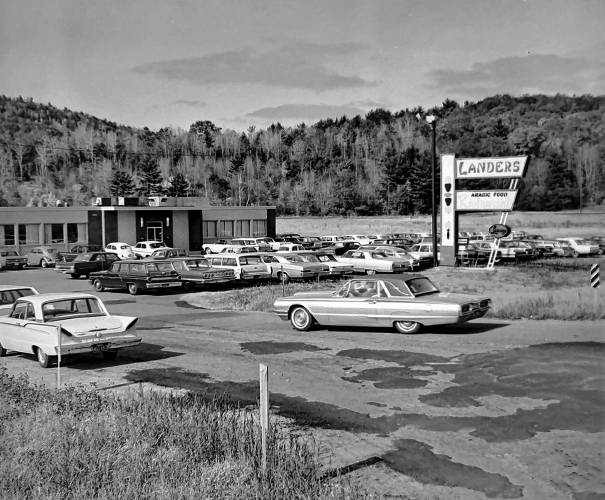 A Look Back: Upper Valley dining scene changes with the times
 The future of fertilizer? Pee, says this Brattleboro institute
Obituaries
 Howard L. Lyman
Newport, NH - Howard L. Lyman, 90 of Newport, NH, passed away peacefully in New London Hospital on April 26, 2024. He was born to Leslie and Eunice (Cobleigh) Lyman in Windsor, VT and enjoyed his life as an avid outdoorsman and gardener... remainder of obit for Howard L. Lyman
 Judith DeMayo
Ossipee, NH - Judith Elizabeth (Sylvester) DeMayo, 82, of Ossipee NH, formerly of Conway NH, passed away in the compassionate care of Mountain View Community Nursing Home in Ossipee, on April 2, 2024. Judie was born in Newton, MA on Jan... remainder of obit for Judith DeMayo
 Henry Francis Tutt
Weathersfield, VT - Henry Francis Tutt, aged 82, of Weathersfield, VT, was called to eternal rest on May 10, 2024, in Lebanon, NH. Born on October 21, 1941, in Meredith, NH, Henry was a product of Brewster Academy in Wolfeboro, NH, and... remainder of obit for Henry Francis Tutt
 Marion Bocash
Marion (Kilton) Bocash Franconia, NH - Marion Inez (Kilton) Bocash, age 96, passed Sunday, March 24, 2024. A graveside service will be held at Pine Grove Cemetery in Grafton, NH at 1:00 P.M. on Friday, June 21, 2024. Ricker Funeral ... remainder of obit for Marion Bocash

